Seattle homeowners near Capitol Hill ask us the same question about tankless water heaters: is it really worth it for my house? Greener Cleaner answers honestly, with real numbers on gas line capacity, venting, and installation cost before you commit.
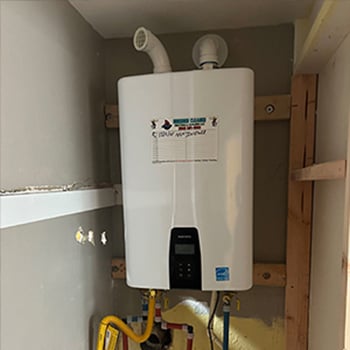 A tankless unit is only as good as the installation behind it. Our licensed, bonded, and insured Seattle technicians (Plumbing Lic. GREENCH741OS, HVAC Lic. GREENCH769NG) size the unit to your household’s peak demand, confirm the gas line can support it, and test flow and temperature before leaving, so the first hot shower is proof it was done right.
Find out whether tankless fits your home, and what it really costs.
Before choosing tankless, check three things: how many fixtures typically run at once, whether your gas meter and line can support a larger appliance, and where a vent can safely exit the home. In Seattle, properties near Capitol Hill vary widely on all three, since a mix of century-old homes, mid-century bungalows, and dense new construction is common and each home was built to a different standard. A short on-site assessment answers all three questions and removes the guesswork before you spend a dollar.
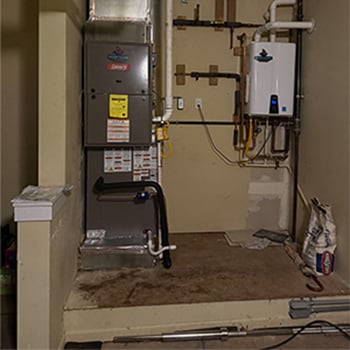 A tank-to-tankless conversion usually involves more than swapping equipment. The old tank’s venting often can’t be reused, the gas line may need upsizing, and a wall-mounted unit changes where hot water and condensate lines need to run. For Seattle properties near Ballard, our technicians map out those changes during the estimate so the quote is complete, then handle the plumbing, gas, and venting work under one roof. When the job is finished, we start the unit, check temperature at the fixtures, and show you how to read its diagnostic codes.
If you’re planning a remodel or addition in Seattle, it’s the ideal time to look at tankless. Moving the water heater to a wall near the bathrooms can shorten pipe runs and cut the wait for hot water. We coordinate with your contractor on gas, venting, and plumbing so the water heater doesn’t hold up the rest of the project.
Plenty of Seattle homeowners come to us after a tankless installation elsewhere left them with weak flow or error codes. Most of those problems trace back to sizing, gas supply, or venting, which is why we check all three before recommending a unit, and why we’re comfortable servicing tankless systems we didn’t install.
We also serve nearby communities including Mercer Island, Puyallup, and Redmond. Dispatch is coordinated across these areas, so a technician already working nearby can often reach you faster than a scheduled appointment would suggest.
Honest answers for Seattle homeowners, before you spend a dollar.