People ask about water filtration for different reasons: taste, odor, spotting on glass, or scale on fixtures. Greener Cleaner’s Puyallup plumbers start with the question that matters, what is actually in your water, and recommend only the equipment that solves it.
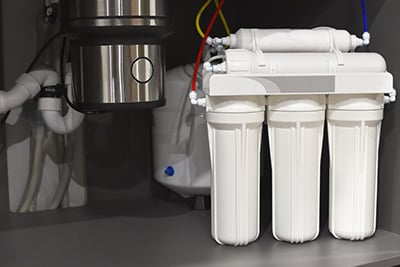 We sell solutions, not gadgets. Greener Cleaner’s Puyallup team (Plumbing Lic. GREENCH741OS, HVAC Lic. GREENCH769NG) will tell you when a simple sediment or carbon filter is enough, when a softener makes sense, and when your water doesn’t need treatment at all.
Honest testing and installation for Puyallup homes. Call Greener Cleaner.
Common reasons homeowners look at treatment include white scale on faucets and in kettles, spots on glassware, soap that doesn’t lather well, a chlorine or musty taste, sediment in the water, or a rotten-egg smell. In Puyallup, where a mix of historic valley homes and newer hillside subdivisions is common, the cause often depends on the water source and the age of the plumbing, so two neighbors near the Washington State Fairgrounds may have different needs.
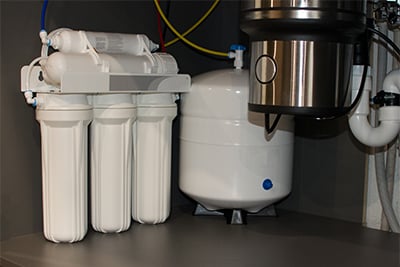 Filtration and softening solve different problems. A sediment or carbon filter reduces particles, chlorine taste, and odor, while a softener removes the minerals that cause scale on fixtures and appliances. Many Puget Sound municipal systems deliver relatively soft water, so a softener isn’t automatically the answer, and hardness varies by water source, including private wells. For Puyallup homes near the Puyallup River, we check what you actually have before recommending equipment.
Before buying any equipment in Puyallup, ask your water provider for its most recent water quality report, which describes the source water and typical hardness. Combined with an on-site check, it tells us whether a softener, a carbon filter, or nothing at all makes sense for your home near the Washington State Fairgrounds.
We’d rather lose a sale than install a system you don’t need. If your Puyallup water doesn’t call for a softener, we’ll say so and point you to a simpler fix, which is a big part of why customers trust our recommendations.
We also serve nearby communities including Bothell, Burien, and Des Moines. Dispatch is coordinated across these areas, so a technician already working nearby can often reach you faster than a scheduled appointment would suggest.
We test first and recommend second. Talk to our Puyallup team today.