Cold snaps and saturated winter soil near the I-5/320th Street interchange are hard on buried water lines, and Federal Way homeowners often notice the damage as a sudden pressure drop or a soggy patch of yard. Greener Cleaner responds to both, year-round.
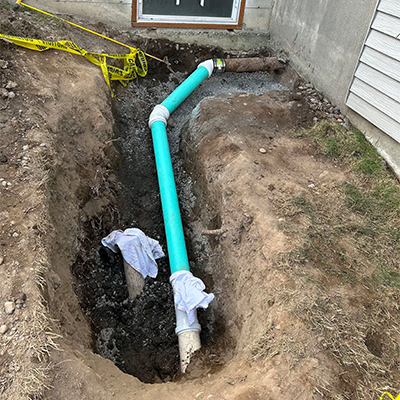 Every water line repair in Federal Way is performed by a licensed, bonded, and insured technician (Plumbing Lic. GREENCH741OS, HVAC Lic. GREENCH769NG). Because a buried line can fail in more than one place, we test the whole run rather than assuming the first leak is the only one, which is how we avoid repeat digs.
Get a clear diagnosis and an honest repair-or-replace answer from our Federal Way team.
The clearest signs of a water line problem are a sudden or gradual loss of pressure throughout the house, a water meter that keeps moving when everything is off, an unexplained jump in the water bill, or a persistently wet or sunken area of yard along the line’s path. In Federal Way, where a mix of single-family homes built from the 1970s through today is common, homes near the I-5/320th Street interchange can have service lines of very different ages, so a newer house next to an older one may show completely different symptoms.
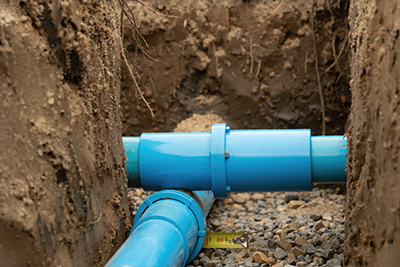 Older service lines were often galvanized steel or early copper, and both can corrode, pit, or split with age and ground movement. A single leak in an otherwise sound line is a reasonable spot repair, but multiple failures usually mean the pipe is at the end of its life. For Federal Way homes near Dash Point, we look at the line’s overall condition before recommending the repair, so you don’t pay for a patch that will fail again within a season.
Knowing where your main shutoff and meter are is the single most useful thing a Federal Way homeowner can do before a water line emergency. If you can’t find yours, we’ll show you during a visit. Because a mix of single-family homes built from the 1970s through today is common near Steel Lake, shutoff locations vary widely, and finding yours in advance saves time when it matters.
Most Federal Way homeowners have never had to think about their service line until it fails. We make that decision easier by showing you what we found, laying out every option with its cost and disruption, and quoting before any ground is broken, so you stay in control of a repair that can otherwise feel overwhelming.
We also serve nearby communities including Bellevue, Bothell, and Burien. Dispatch is coordinated across these areas, so a technician already working nearby can often reach you faster than a scheduled appointment would suggest.
Low pressure or a wet patch in the yard? Find the real cause before anyone digs. Call (253) 338-8878.