Freeze-thaw cycles near the I-5/320th Street interchange are one of the more common causes of pipe failure in Federal Way, particularly in exterior walls and unheated crawlspaces. Greener Cleaner repairs and replaces damaged pipe sections year-round.
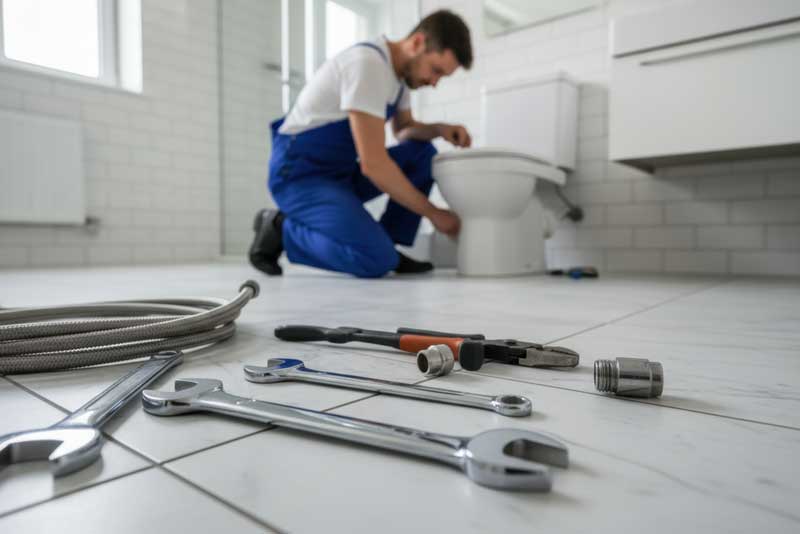 Greener Cleaner’s Federal Way technicians are licensed, bonded, and insured (Plumbing Lic. GREENCH741OS, HVAC Lic. GREENCH769NG) for both individual pipe repairs and full whole-house repiping projects. We work with copper, PEX, and PVC, and will walk you through the tradeoffs of each before recommending a material for your home. We work with copper, PEX, and PVC, and every recommendation accounts for your home’s specific layout and access, not a one-size-fits-all approach.
If you’ve had more than one or two pipe leaks in the past year, especially in different parts of the home, that pattern is worth a full assessment rather than treating each leak as an isolated incident. For Federal Way properties near the I-5/320th Street interchange with a mix of single-family homes built from the 1970s through today, recurring leaks are the clearest sign that aging galvanized pipe is corroding broadly rather than failing at just one weak point. A pipe that’s made a new sound — banging, knocking, or whistling — is worth mentioning even if nothing is visibly wrong yet.
The decision between repairing a pipe and repiping a section or the whole home comes down to the material and its remaining lifespan. Galvanized steel pipe, common in Federal Way homes built before the 1960s-70s near Dash Point, has a finite service life and tends to corrode from the inside, narrowing the pipe and eventually failing regardless of how well it’s maintained. Copper and modern PEX last considerably longer, which is why a repiping project is often the better long-term value once galvanized pipe starts failing repeatedly. If a repair area reveals broader corrosion nearby, we’ll show you what we’re seeing before recommending an expanded scope.
From a single leak to a whole-house project, our Federal Way team handles it all.
A repiping project is a bigger investment than a single pipe repair, which is why we only recommend it when the underlying condition actually supports that conclusion — not as an upsell on a straightforward, isolated leak. Federal Way homeowners get an honest assessment either way. It also means we’re not recommending a bigger project than the actual condition of your plumbing supports.
We also serve nearby communities including Bellevue, Bothell, Burien, and dispatch is coordinated across all of these areas so a technician already working nearby can often reach you faster than a scheduled appointment would suggest. See our Federal Way service area page for the full range of HVAC and plumbing services we provide locally.
If leaks keep coming back, it might be the pipe itself. Call Federal Way’s trusted repiping team today.