Western Washington’s long, wet season puts sump pumps to work for months, and Federal Way homes near the I-5/320th Street interchange often see the most strain during heavy, sustained rain. Greener Cleaner installs and services pumps before the storms arrive.
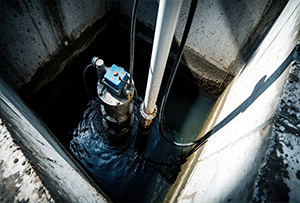 We install and service submersible and pedestal pumps from major brands, and every Federal Way job is completed by a licensed, bonded, and insured plumber (Plumbing Lic. GREENCH741OS, HVAC Lic. GREENCH769NG). Testing under load, not just a quick power check, is how we confirm a pump will work when it counts.
Right-sized pump, correct discharge, and backup protection for your Federal Way home.
Warning signs include a pump that runs constantly or cycles on and off rapidly, strange grinding or rattling noises, a pump that won’t start when the pit is full, visible rust, or a pump that’s more than seven to ten years old. Water on the floor, a musty smell, or damp walls and carpet are signs the system may already be failing. In Federal Way, where a mix of single-family homes built from the 1970s through today is common, homes near the I-5/320th Street interchange can have very different drainage conditions, so we assess your system specifically.
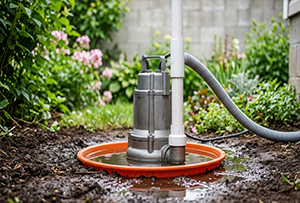 Most sump pumps last roughly 7 to 10 years, and many fail when it matters most, during sustained rain. A stuck float, a clogged intake, a worn motor, or a failed check valve are the usual culprits. For Federal Way properties near Dash Point, we diagnose which one it is, and we’ll tell you honestly whether repair or replacement is the better value.
Check your discharge line before the wet season. Leaves, ice, or a kinked hose can block it, and a pump that runs but can’t discharge is as useless as one that won’t start. We include a discharge check on every Federal Way sump visit, and we’re happy to show you what to look for yourself.
A sump pump is a system, not just a motor. We check the pit, float, check valve, discharge, and power, and we explain what we found, so Federal Way homeowners know exactly how protected they are heading into the rainy season.
We also serve nearby communities including Bellevue, Bothell, and Burien. Dispatch is coordinated across these areas, so a technician already working nearby can often reach you faster than a scheduled appointment would suggest.
Test, repair, or replace your sump pump with Greener Cleaner’s Federal Way team. Call (253) 338-8878.