Greener Cleaner has repaired and replaced water lines across Everett, and our approach is consistent: locate the failure precisely, explain the repair options, and quote before any digging starts.
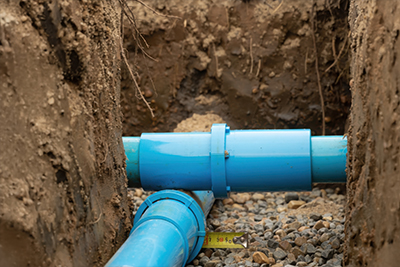 Replacing a service line is a major project, so we take the assessment seriously: pressure test, leak location, pipe material, depth, and route. Our Everett team (Plumbing Lic. GREENCH741OS, HVAC Lic. GREENCH769NG) puts the findings and the repair options, including trenchless where it applies, in writing before work begins.
The clearest signs of a water line problem are a sudden or gradual loss of pressure throughout the house, a water meter that keeps moving when everything is off, an unexplained jump in the water bill, or a persistently wet or sunken area of yard along the line’s path. In Everett, where a mix of historic downtown homes and newer north-end developments is common, homes near the Port of Everett can have service lines of very different ages, so a newer house next to an older one may show completely different symptoms.
Get a clear diagnosis and an honest repair-or-replace answer from our Everett team.
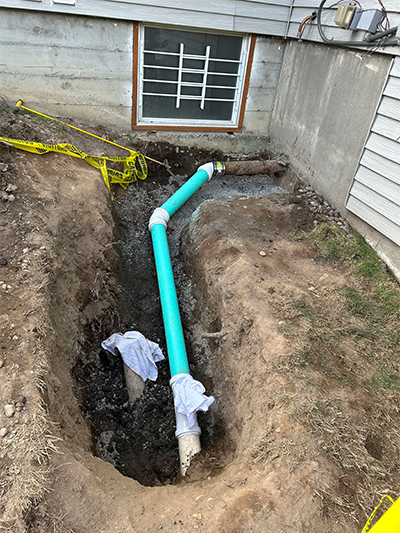 There are two broad ways to replace a service line: open trench, which exposes the full route, and trenchless methods like pipe bursting, which pull a new line through the old path with minimal excavation. Which one is available depends on soil, depth, and what sits above the line, including driveways, landscaping, and other utilities. For Everett properties near the Boeing Everett plant, we evaluate the route during the assessment and tell you honestly what each method will involve.
After a repair or replacement, we restore the work area as agreed in the quote and recommend a simple follow-up: watch your water meter with all fixtures off for a short period to confirm the line is holding. Properties near the Boeing Everett plant often have mature landscaping above the line, so we plan access carefully to protect it wherever the method allows.
A water line repair is a project you only want to do once. Greener Cleaner’s Everett team takes the time to test the whole line, identify the pipe material, and explain whether a spot repair or a replacement is the better value, so the repair you pay for is the one that lasts. We’ll also walk you through permits and any coordination with the utility on their side of the meter.
We also serve nearby communities including Tacoma, Tukwila, and Auburn. Dispatch is coordinated across these areas, so a technician already working nearby can often reach you faster than a scheduled appointment would suggest.
Low pressure or a wet patch in the yard? Find the real cause before anyone digs. Call (425) 357-7797.