Des Moines homeowners near the Des Moines Marina ask us the same question about tankless water heaters: is it really worth it for my house? Greener Cleaner answers honestly, with real numbers on gas line capacity, venting, and installation cost before you commit.
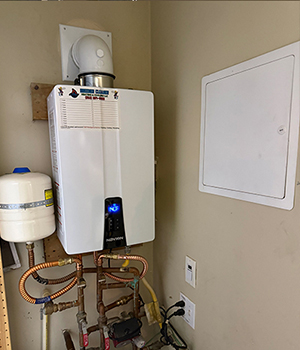 Every tankless installation in Des Moines is completed by a licensed, bonded, and insured technician (Plumbing Lic. GREENCH741OS, HVAC Lic. GREENCH769NG). Because our team works on both plumbing and gas-fired equipment, we evaluate the whole system, including gas line size, venting path, and condensate drainage, rather than just mounting a new unit on the wall. You get a written quote that covers those upgrades before work begins.
Honest answers for Des Moines homeowners, before you spend a dollar.
Watch for the signs that a tank has reached its limit: hot water that runs out when two people shower back to back, a unit more than ten years old, rust-colored water, or a tank that has started to leak. If any of those describe your Des Moines home, it’s worth pricing tankless alongside a standard replacement. For homes near the Puget Sound shoreline, where a mix of older coastal and marina-adjacent homes is common, we often find that the water heater closet or garage space can be reclaimed once a wall-mounted unit goes in.
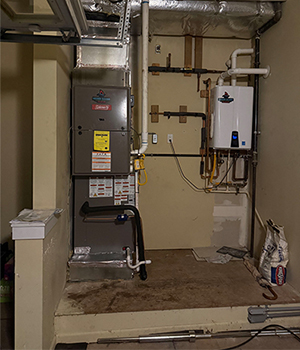 The biggest question with tankless is whether your home can support it. A tankless unit needs a gas line sized for a much higher burn rate than a tank, a vent path to the outside, and a water supply with enough flow to keep the burner firing. For Des Moines homes near the Puget Sound shoreline, we check each of those before recommending a model, and we size the unit to the temperature rise you actually need in winter rather than the number on the box. That prevents the classic tankless disappointment: a unit that handles one shower but struggles when the dishwasher and a second bathroom join in.
One local detail worth knowing in Des Moines: many homes near the Des Moines Marina were built with a water heater closet or garage corner sized for a 40- or 50-gallon tank, and a wall-mounted tankless unit frees that space for storage. We measure the existing space, the gas meter location, and the likely vent route during the estimate, so you can see exactly what the finished installation would look like before you decide.
Plenty of Des Moines homeowners come to us after a tankless installation elsewhere left them with weak flow or error codes. Most of those problems trace back to sizing, gas supply, or venting, which is why we check all three before recommending a unit, and why we’re comfortable servicing tankless systems we didn’t install.
We also serve nearby communities including Redmond, Renton, and Seattle. Dispatch is coordinated across these areas, so a technician already working nearby can often reach you faster than a scheduled appointment would suggest.
Find out whether tankless fits your home, and what it really costs. Call (206) 210-4113.