As Bellevue neighborhoods near Downtown Bellevue’s high-rise core age, the buried service lines that supply them are aging too. Greener Cleaner repairs and replaces water lines and mains for Bellevue properties, with trenchless options where the site allows.
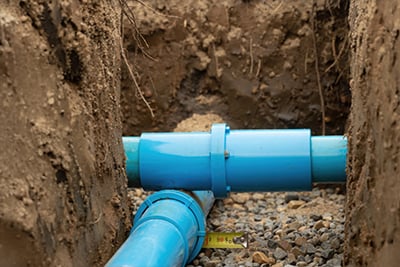 Replacing a service line is a major project, so we take the assessment seriously: pressure test, leak location, pipe material, depth, and route. Our Bellevue team (Plumbing Lic. GREENCH741OS, HVAC Lic. GREENCH769NG) puts the findings and the repair options, including trenchless where it applies, in writing before work begins.
Some failures are quieter. Discolored water after the line has been idle, a faint hissing near the meter, or a lawn that stays green and soft in one strip during a dry spell can all point to a leak underground. If you notice any of these in your Bellevue home near the I-405 corridor, check your meter with all fixtures off, and call us if it’s still turning.
Get a clear diagnosis and an honest repair-or-replace answer from our Bellevue team.
Older service lines were often galvanized steel or early copper, and both can corrode, pit, or split with age and ground movement. A single leak in an otherwise sound line is a reasonable spot repair, but multiple failures usually mean the pipe is at the end of its life. For Bellevue homes near Meydenbauer Bay, we look at the line’s overall condition before recommending the repair, so you don’t pay for a patch that will fail again within a season.
Knowing where your main shutoff and meter are is the single most useful thing a Bellevue homeowner can do before a water line emergency. If you can’t find yours, we’ll show you during a visit. Because a blend of high-density condos downtown and larger single-family homes further east is common near the I-405 corridor, shutoff locations vary widely, and finding yours in advance saves time when it matters.
A water line repair is a project you only want to do once. Greener Cleaner’s Bellevue team takes the time to test the whole line, identify the pipe material, and explain whether a spot repair or a replacement is the better value, so the repair you pay for is the one that lasts. We’ll also walk you through permits and any coordination with the utility on their side of the meter.
We also serve nearby communities including Des Moines, Everett, and Federal Way. Dispatch is coordinated across these areas, so a technician already working nearby can often reach you faster than a scheduled appointment would suggest.
Low pressure or a wet patch in the yard? Find the real cause before anyone digs. Call (425) 357-7797.