Interest in whole-home filtration has grown alongside Redmond’s housing growth near the Sammamish River Trail, and so has the amount of equipment on the market. Greener Cleaner helps Redmond homeowners cut through the options and install the system that fits.
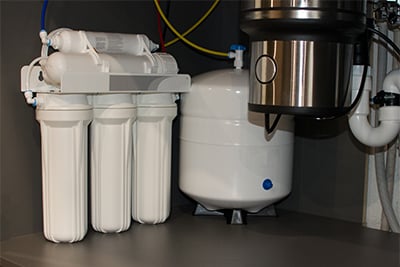 Water treatment is full of confident marketing, so we keep the process practical. Greener Cleaner’s Redmond technicians (Plumbing Lic. GREENCH741OS, HVAC Lic. GREENCH769NG) check hardness and basic water conditions on site, explain what the results mean, and install licensed, code-compliant equipment sized to your household’s flow.
We test first and recommend second. Talk to our Redmond team today.
Common reasons homeowners look at treatment include white scale on faucets and in kettles, spots on glassware, soap that doesn’t lather well, a chlorine or musty taste, sediment in the water, or a rotten-egg smell. In Redmond, where a mix of established neighborhoods and newer high-density housing near tech campuses is common, the cause often depends on the water source and the age of the plumbing, so two neighbors near the Sammamish River Trail may have different needs.
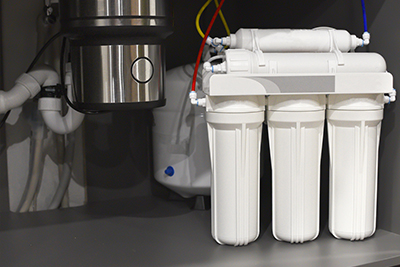 Filtration and softening solve different problems. A sediment or carbon filter reduces particles, chlorine taste, and odor, while a softener removes the minerals that cause scale on fixtures and appliances. Many Puget Sound municipal systems deliver relatively soft water, so a softener isn’t automatically the answer, and hardness varies by water source, including private wells. For Redmond homes near Marymoor Park, we check what you actually have before recommending equipment.
Maintenance is part of the decision. A filter that’s never changed does more harm than good, and a softener needs salt. We’ll tell Redmond homeowners exactly what each system will require, so you can choose equipment that fits how much attention you want to give it.
Water treatment should make daily life easier, not add a new chore. Greener Cleaner’s Redmond plumbers choose equipment you can maintain simply, place it where you can reach it, and explain filter changes and salt refills in plain language, so the system keeps doing its job long after installation.
We also serve nearby communities including Everett, Federal Way, and Kent. Dispatch is coordinated across these areas, so a technician already working nearby can often reach you faster than a scheduled appointment would suggest.
Honest testing and installation for Redmond homes. Call Greener Cleaner