The Hidden Link Between Air Quality and Heating Efficiency
The Hidden Link Between Air Quality and Heating Efficiency
As the temperatures start to dip around Puget Sound, most businesses and homeowners are thinking about the power of their heating system and not the purity of the air it will circulate. The surprising truth of the matter: indoor air quality can directly affect the efficiency of your heating system's performance, and vice versa. Understanding this relationship can help reduce energy costs, boost comfort levels, and even protect your health.
We see it daily at Greener Cleaner Heating & Air. When the air inside is balanced and clean, your heating system will run smoothly, delivering even, consistent warmth when you need it most, without wasting energy. But this is our job, so let's break it down and take a look at why heating efficiency and indoor air quality (IAQ) are so closely related — and then we'll share a few things you can do that will make a big difference in your home or at the office.
Indoor Air Is Often More Polluted Than You Think
The typical American spends almost 90% of their time indoors, according to the U.S. Environmental Protection Agency (EPA), where the air is often two to five times more polluted than outdoors, and in some cases up to 100 times more contaminated (American Lung Association, 2023). This does not bode well, considering studies in the U.K. estimate we spend 92% of our lives inside. While outdoor air quality is highly regulated, sadly, the air you're breathing indoors often escapes scrutiny.
Common indoor pollutants include:
- Mold
- Dust
- Pet dander
- Carbon monoxide
- Radon
- Volatile organic compounds (VOCs) — carbon-containing chemicals that vaporize at room temperature and come from paints, solvents, fuels, cleaners, and more
Newer buildings, designed to be highly energy efficient, are particularly vulnerable thanks to their airtight construction. This allows contaminants to continue to recirculate throughout the heating system in a never-ending loop.
Air Quality and Heating Efficiency Are a Two-Way Street
Think of your heating system as the lungs of your building. It doesn't just control the temperature — it is continuously sucking in, conditioning, and circulating the air. When that air is damp or dirty, it doesn't just harm the people inside, it also harms the performance of the system.
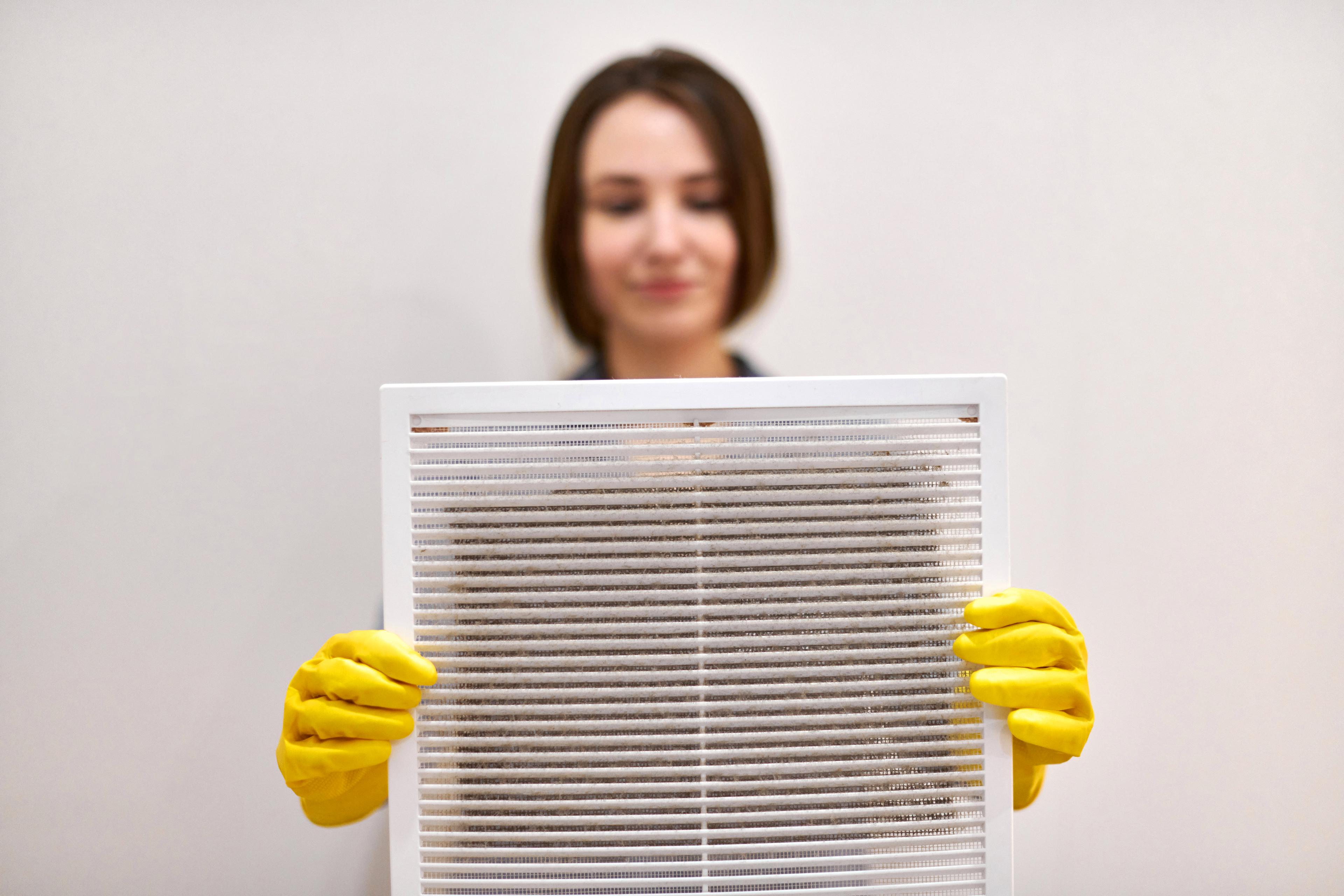
Dust and debris build up inside filters, coils, and blowers, forcing the HVAC system to work harder to push air. That leads to:
- Higher energy use
- Uneven heating
- Premature wear on system components
Research summarized by Facilities Dive (2025) shows that a cleaned HVAC system uses up to 60% less fan energy, and coil cleaning could improve airflow by up to 110%. In commercial buildings, that translates into thousands of dollars in energy savings every year.
Hidden Efficiency Killers: Moisture and Mold
Controlling moisture plays a huge role when it comes to indoor air quality in both residential and commercial settings. Approximately 47% of buildings in America experience dampness or mold conditions (Global Indoor Health Network, 2022). That's not just a health issue — it's a performance issue too.
Mold spores can:
- Clog air filters
- Line ductwork
- Coat heat exchange surfaces
- Reduce airflow and heat-transfer efficiency
In both commercial HVAC systems and home furnaces, even a small imbalance in humidity can lead to condensation and corrosion.
The costs here are significant. Indoor dampness has been linked to over $15 billion of asthma-related healthcare costs each year (Journal of Environmental & Public Health, 2018). For business owners, this can also lead to employee discomfort, customer complaints, and higher energy costs. Homeowners will find they have to replace their system sooner and pay bigger heating bills.
The Trouble With Modern Buildings
Nowadays, homes and commercial sites are built to be airtight. This is excellent for energy efficiency, but potentially disastrous for air quality. When a building is not properly ventilated, pollutants remain trapped indoors.
Opening a window seems simple — but if you're heating a building, it's a costly mistake. The NRDC reports up to one-third of a building's heat can escape even through a closed window.
The smarter option is mechanical ventilation:
- Energy Recovery Ventilators (ERVs)
- Heat Recovery Ventilators (HRVs)
These systems bring in filtered outdoor air while preserving up to 80% of the heat energy that might otherwise be lost. They're ideal for modern homes and energy-conscious commercial spaces.
How a Clean System Improves Air and Efficiency
Cleanliness equals performance. Whether it's a single-family furnace or a multi-zone commercial HVAC unit, a clean system will always run better. Here's how regular maintenance boosts both air quality and heating efficiency:
- Air Filters: Replace monthly in homes (quarterly for commercial systems). Consider high-efficiency MERV-rated filters that trap allergens and bacteria.
- Ductwork: Dust and microbial buildup restrict airflow and keep recycling pollutants. Cleaning ducts can improve airflow by up to 89%.
- Blowers & Coils: Clean blowers reduce energy consumption; clean coils restore optimal heat exchange.
- Control Humidity: Keep indoor humidity between 30–50% to prevent mold, static, and discomfort.
- System Tune-Ups: Professional inspections catch leaks, worn-out parts, and air-balance issues before they drive up bills or harm air quality.
In commercial sites, preventative maintenance also helps keep you compliant with local air quality and ventilation standards.
That Connection Between Health and Productivity
An estimated 1.2 million U.S. commercial buildings are thought to have "sick building syndrome," where occupants experience symptoms like irritation and headaches linked to indoor conditions (Journal of Occupational and Environmental Medicine, 1992). Poor air quality also contributes to lower performance.
Studies show even modest improvements in air cleanliness and ventilation can:
- Boost productivity by 8–11%
- Reduce absenteeism
- Improve cognitive function
Homes see similar benefits. Minor improvements can reduce asthma issues and create healthier environments for elders and children — the two groups most vulnerable to indoor pollutants, according to the EPA. Improving air quality is a solid investment in both wellness and system performance.
Tips to Help You Keep Your System Running Optimally
Homeowners
- Replace air filters every 1–3 months
- Keep vents clear of furniture and dust
- Use kitchen and bathroom fans to control humidity
- Schedule annual HVAC maintenance before winter sets in
Business Owners / Facility Managers
- Review your HVAC maintenance schedule (quarterly inspections are ideal)
- Use commercial-grade air filters or purification systems
- Monitor humidity in basements, storage areas, and mechanical rooms
- Consider ERV/HRV ventilation for fresh air without heat loss
We Are the Bridge Between Air Quality and Efficiency
Our mission is right in our name. We help homeowners and business owners across the Puget Sound region design and maintain systems that deliver cleaner air and higher performance without increasing energy costs.
Here's what we can do for you:
- Heating Installation & Repair: Furnaces, boilers, and high-efficiency heat pumps
- Cooling & Air Quality Solutions: Air conditioning, ductless systems, filtration upgrades
- Plumbing & Water Heater Services: Prevent leaks and excess humidity that impact air quality
- Preventative Maintenance Plans: Regular cleanings and tune-ups to protect your air and your investment
The Bottom Line Affects Your Bottom Line
Clean air and heating efficiency go hand in hand. When indoor air stays pure, your HVAC system doesn't have to fight blockages, buildup, or dampness. That means:
- Lower energy bills
- A longer system lifespan
- A healthier environment for everyone who lives, works, or visits your space
That's the bottom line.
Business Hours & Contact
Business Hours:
- Monday–Friday: 7:00 AM – 6:00 PM
- Saturday: 8:00 AM – 2:00 PM
- Sunday: Emergency Service Only
Same-Day Service Available | 24/7 Emergency Response | Free Consultations
- Email: contact.greenercleanerheating@gmail.com
- Visit: 1916 1st St NE, Auburn, WA 98002
- Call Us: (253) 400-5978